Levy changes for business

All businesses in New Zealand pay a Work levy. From 1 April 2026 changes were introduced to keep ACC fair and sustainable, and to fund care for work-related injuries.

A quick summary of what’s changed: 

  • Interest applies to all new instalment plans 
  • Businesses on Experience Rating will pay an additional ER Programme rate  
  • The No Claims Discount has been removed.  

Self-employed and small business:

There are upcoming changes that will impact small business and self-employed people who are part of the No Claims Discount programme and/or work in the sports sector.

If you’re part of the No Claims Discount programme, your work-related claims history determines whether you receive a discount or a loading on your work levy. A loading means you’ll pay more if your claims history shows a higher risk of injury claims.

Data has shown that health and safety outcomes have not improved as a result of the programme, so the No Claims Discount is ending. This is because businesses outside the programme currently fund the discount.

Removing the No Claims Discount and updating Experience Rating means most small businesses and self-employed people will pay lower base levies than they would have under the previous system.

From the 2027 levy year onwards, No Claims Discount adjustments will no longer apply. Your Work levy will be calculated on your business activity (Classification Unit) only.

If you’re an employer or a shareholder employer:

You’ll see this change in your provisional invoice you receive in 2026.

If you’re self-employed:

The change will appear on the invoice you receive in 2027, unless you stop being self-employed earlier.

No Claims Discount reports were discontinued in 2025, but historical reports remain available in MyACC for Business. 

Log in to MyACC for Business

Source: ACC – Levy changes for business

Disclaimer
Unfortunately, with details changing all the time and at such speed, we need to add that the above content is correct at the time of writing as far as the author is aware and is very much subject to change. We have, to the best of our ability, acknowledged any shared content. All related links provided to the corresponding websites are subject to change as they are live links.

The Income Tax (Kilometre Rates for the Business Use of Vehicles for the 2025-26 income year

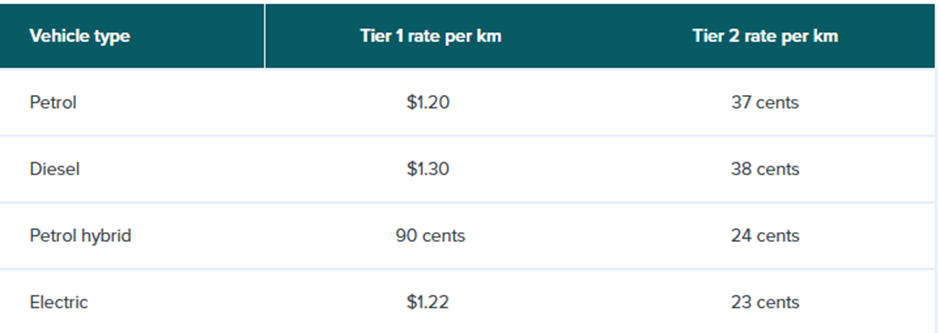
The rates set out below apply for the 2025-2026 income year for business motor vehicle expenditure claims. The Tier 1 rates reflect an overall increase in vehicle running costs in the income year.

The table of rates for the 2025-2026 income year

The Tier 1 rate is a combination of your vehicle’s fixed and running costs. Use it for the business portion of the first 14,000 kilometres travelled by the vehicle in an income year. This includes private use travel.

The Tier 1 rate reflects vehicle fixed ownership costs (Annual relicensing, insurance, interest on outlay, depreciation etc) and vehicle running costs (fuel, road user charges when applicable, tyres and vehicle maintenance costs).

The Tier 2 rate is for running costs only. Use it for the business portion when overall vehicle travel (both business and private) exceeds 14,000 kilometres in an income year.

Source: IRD – https://www.taxtechnical.ird.govt.nz/operational-statements/2026/os-19-04-km-2026

Disclaimer
Unfortunately, with details changing all the time and at such speed, we need to add that the above content is correct at the time of writing as far as the author is aware and is very much subject to change. We have, to the best of our ability, acknowledged any shared content. All related links provided to the corresponding websites are subject to change as they are live links.

Fringe benefit tax changes

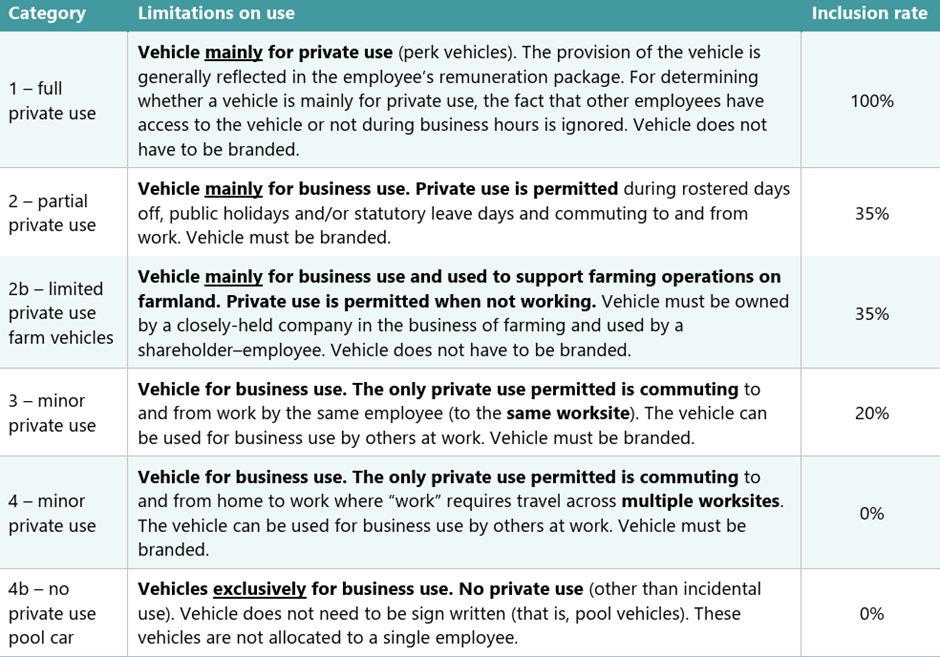
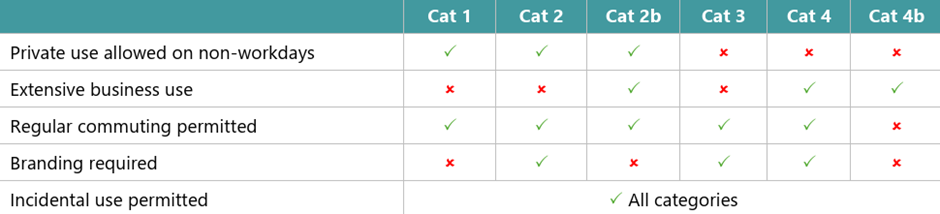
Incidental use (use that is infrequent or ad hoc) would not impact the classification of the vehicle or be subject to FBT. The purpose of this rule would be to remove those situations when there is private use of a work vehicle, but it is not remunerative or a substitute for remuneration. For example, an employee using a work van one weekend to move. What about work-related vehicles? The proposal would remove existing exemptions (such as the work-related vehicle exemption) because these should be captured within the categories. These should better reflect the range of vehicle use available for employees. For certain emergency vehicles, there would be a new exemption that would totally exempt these vehicles from the FBT regime.

Disclaimer
Unfortunately, with details changing all the time and at such speed, we need to add that the above content is correct at the time of writing as far as the author is aware and is very much subject to change. We have, to the best of our ability, acknowledged any shared content. All related links provided to the corresponding websites are subject to change as they are live links.